Are Flyers Still Effective for Advertising in 2026?
Yes, flyers still work — but only when used right. See where flyer advertising beats digital, where it falls short, and how to make your campaign count.
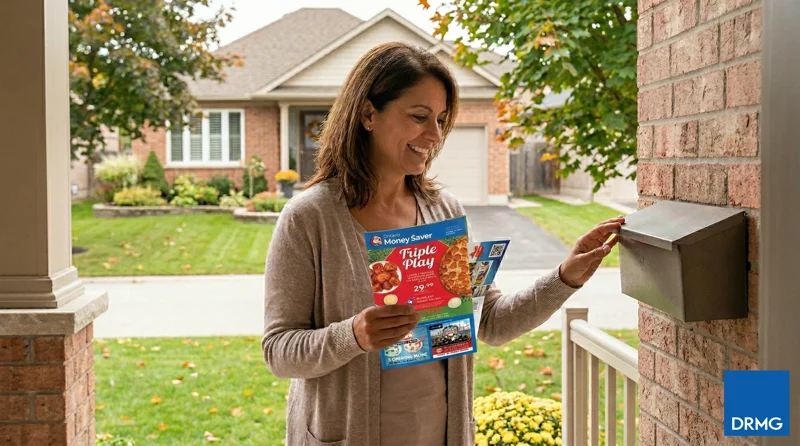
The short answer is yes — but it depends on how you use them and where. Flyers aren’t magic, and they don’t work for every business or every type of campaign. That said, for the right situation, they’re one of the more cost-effective ways to reach a local audience, and they’ve been doing that job reliably for decades without being replaced.
Why Physical Advertising Still Gets Attention
Flyers have one advantage that’s easy to underestimate: they’re physical. A flyer sits on a counter, gets stuck to a bulletin board, or ends up on someone’s kitchen table. None of that is possible with a social media post or a banner ad.
Research on print versus digital advertising consistently shows that physical materials generate stronger memory recall than digital equivalents. People retain information better from print, partly because holding something creates a different kind of attention than scrolling past it on a screen.
Physical persistence also means a single flyer can generate multiple impressions. One flyer on a coffee shop bulletin board gets seen by dozens of people over several weeks at no additional cost. A digital ad stops the moment you stop paying for it.
That’s a genuinely different value proposition — not better or worse than digital in every situation, but meaningfully different in ways that matter for certain campaigns.
Where Flyers Work Best in 2026
Flyers still perform reliably for businesses and campaigns with a strong local focus.
Restaurants, gyms, salons, and local retail use them to reach people within a two- to five-mile radius who might not follow them on social media but would absolutely visit if they knew the business existed. Real estate flyers remain a standard part of agent marketing because buying a home is a local, in-person decision — and a flyer in a yard sign box reaches buyers at the exact moment they’re standing in front of the property.
Cheap event flyers for concerts, pop-up sales, community gatherings, and grand openings work because the audience is defined by geography and timing. That’s exactly what flyers are built for — reaching people in a specific place at a specific time.
Churches, schools, local nonprofits, and neighborhood businesses use flyers because their audience is literally nearby. You don’t need a mailing list or an ad budget to reach people who walk past your storefront every day.
Where Flyers Don’t Work as Well
Flyers are a poor fit for national brand awareness campaigns. They don’t scale economically, they’re difficult to track the way digital ads are, and a broad or geographically scattered audience doesn’t benefit from the hyperlocal precision that makes flyers effective in the first place.
B2B sales is another weak spot. If you’re selling software, consulting services, or professional tools to a decision-maker at a company, a flyer in a mailbox isn’t reaching the right person in the right context.
Being honest about where flyers fall short is part of using them well. They’re a specific tool, not a default marketing channel, and knowing their limits helps you decide when to use them and when to put the budget elsewhere.
How to Make a Flyer Campaign That Actually Gets Results
A solid distribution strategy matters as much as a good design. Handing flyers out at random doesn’t work nearly as well as placing them where your ideal customer already spends time. That specificity is what separates a flyer campaign that generates response from one that generates recycling.
Timing matters too. A flyer for a Friday event should go out on Wednesday or Thursday — close enough that people remember it, but not so early they forget by the time the event arrives.
A clear call to action is non-negotiable. If you want someone to visit your website, include a QR code. If you want a phone call, make the number large and easy to spot. A flyer that makes someone say “that sounds interesting” but gives them no obvious next step leaves responses on the table.
For design fundamentals that directly affect response rates, see our guide on what makes a flyer design worth printing. Good distribution of a poor design still underperforms good design distributed thoughtfully — both sides of the equation matter.